 © Serendipity Tours
Eastern Turkey & Black Sea Tour - 16 Days
Hidden Treasures Beyond the Tourist Trail
Tour Highlights
Gobekli Tepe & Karahan Tepe — Featured on This Tour
The world's oldest known temple complex (9600 BC) — built 7,000 years before Stonehenge. Fazli has been guiding here since 2005, before the road existed. This is the discovery that permanently rewrote human prehistory, and you will stand inside it.
- Safranbolu: a perfectly preserved 17th-century Ottoman town with UNESCO World Heritage status
- Sumela Monastery: a Byzantine monastery perched on a cliff face 1,200 metres above sea level, carved into sheer rock
- Ani: the abandoned Armenian capital on the ancient Silk Road — a ghost city of extraordinary beauty and silence
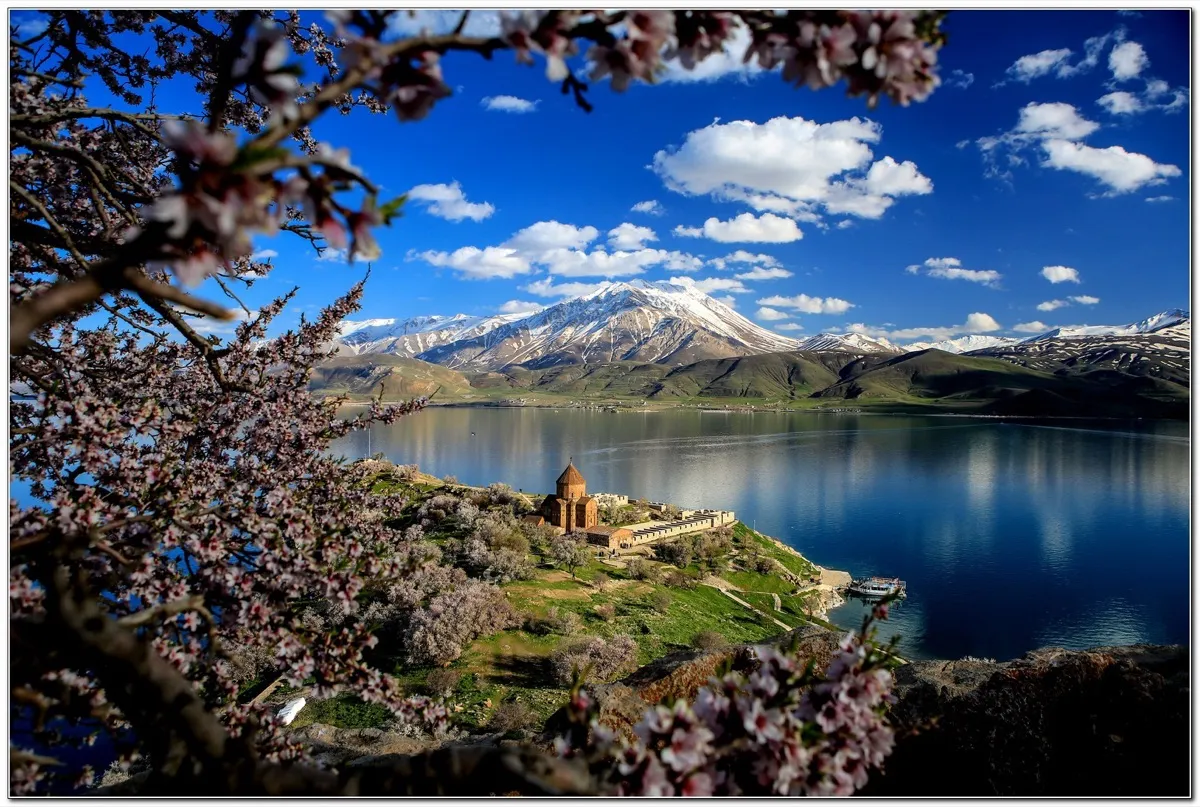
- Akdamar Island: a 10th-century Armenian church with remarkable biblical stone reliefs, rising from Lake Van
- Mardin: a city of honey-coloured stone built into the Mesopotamian hillside, with extraordinary Artuqid architecture
- Gobekli Tepe: the world's oldest temple complex (9600 BC) — the discovery that rewrote human prehistory
- Mount Nemrut: colossal 2,000-year-old stone heads at 2,134 metres, at sunrise or sunset
Day-by-Day Itinerary
Overview
The Eastern Turkey & Black Sea Tour is our most adventurous journey — designed for travellers who have already seen Istanbul and Cappadocia, and are ready to discover the Turkey that most visitors never find.
This is the Turkey of perfectly preserved Ottoman towns, Byzantine monasteries carved into cliff faces, Armenian ruins on the ancient Silk Road, and the world’s oldest temple complex hidden beneath the red earth of Anatolia. It is quieter, more remote, and more profoundly rewarding than anything on the standard tourist circuit.
Itinerary
Day 1 — ISTANBUL
Arrival at Istanbul International Airport. Private transfer to hotel.
Istanbul is both the beginning and the frame for this journey. Before heading east, you rest in the city that was for centuries the boundary between the known and unknown worlds — the last familiar landmark before the vast Anatolian interior.
Accommodation: 5-Star Holiday Inn, Istanbul
Day 2 — ISTANBUL
Istanbul’s iconic landmarks: Topkapi Palace, Hagia Sophia, Blue Mosque, Hippodrome, Grand Bazaar.
Hagia Sophia has been a church, a mosque, and a museum — and has just become a mosque again. Its 1,500-year history contains the history of civilisation itself: Byzantine splendour, Ottoman conquest, secular nationalism, and now religious revival, all in a single building.
Distance: 10 km | Meals: Breakfast | Accommodation: 5-Star Holiday Inn, Istanbul
Day 3 — ISTANBUL
Suleymaniye Mosque and Golden Horn views. Bosphorus morning cruise. Istiklal Street, Galata Tower, Spice Market, Rustem Pasha Mosque.
The Bosphorus cruise is both geography lesson and pure pleasure — the strait that separates Europe from Asia, flanked by Ottoman waterfront palaces and fishing villages, is one of the world’s great urban waterways.
Distance: 15 km | Meals: Breakfast | Accommodation: 5-Star Holiday Inn, Istanbul
Day 4 — SAFRANBOLU (UNESCO)
Drive to Safranbolu — a perfectly preserved 17th-century Ottoman trading town. Walk the historic district: timber-frame mansions, the Cinci Han caravanserai, Koprulu Mehmet Pasha Mosque, traditional bazaar.
Safranbolu is what every Ottoman town looked like before modernisation. Its 1,000+ registered historic buildings — 17th-century mansions with projecting upper floors and hand-carved interiors — have been maintained, not reconstructed. This is the real thing. The town’s name comes from saffron, once its most valuable export.
Distance: 390 km | Meals: Breakfast, Dinner | Accommodation: Historic Gulevi Hotel, Safranbolu
Day 5 — HATTUSA (UNESCO) — AMASYA
Visit Hattusa, capital of the Hittite Empire (1650-1200 BC) — the world’s second-oldest surviving written peace treaty was signed here. Continue to Amasya, the “City of Princes,” with its rock tombs overlooking the river.
The Hittites were one of the ancient world’s great powers — yet they were entirely unknown to history until 1906. Hattusa’s massive city walls, temples, and archives contain 30,000 clay tablets in multiple languages, still being translated. Amasya’s Pontic royal tombs are carved directly into the cliff face above the Yesilirmak River.
Distance: 280 km | Meals: Breakfast, Dinner | Accommodation: Ottoman mansion hotel, Amasya
Day 6 — TRABZON (BLACK SEA COAST)
Drive north to the Black Sea coast. Trabzon: Hagia Sophia of Trabzon (a 13th-century Byzantine church decorated with extraordinary frescoes), Ataturk Mansion, city centre.
Trabzon (ancient Trapezus) was an important trading port on the Black Sea for 2,500 years — Greek, Roman, Byzantine, Genoese, and Ottoman merchants all passed through. The Hagia Sophia here was built while Constantinople was occupied by Crusaders and served as a temporary artistic refuge for Byzantine culture.
Distance: 350 km | Meals: Breakfast, Dinner | Accommodation: 5-Star hotel, Trabzon
Day 7 — SUMELA MONASTERY
Visit the spectacular Sumela Monastery — a 4th-century Byzantine foundation built into a sheer cliff face 1,200 metres above the Altindere Valley, accessible only by mountain path.
Sumela was founded in 386 AD. Its cliff-face position — carved directly into the mountain, accessible only by a steep path — was a deliberate act of isolation. The monastery’s frescoed interior, painted and repainted over 1,600 years, is one of the most remarkable decorative programs in Byzantine art. The setting is genuinely breathtaking: a building hanging on a cliff above a deep forest gorge.
Distance: 50 km | Meals: Breakfast, Lunch, Dinner | Accommodation: 5-Star hotel, Trabzon
Day 8 — ERZURUM
Drive east through Black Sea mountains to Erzurum. Visit the 12th-century Cifte Minareli Madrasa and the great mosque of Yakutiye — Mongol architecture at its most refined.
Erzurum sits at 1,757 metres and was for centuries the crossroads of trade routes linking the Black Sea to Persia, the Silk Road to the Caucasus. Its Mongol-era architecture is unlike anything else in Turkey — geometric complexity and mathematical precision in stone.
Distance: 260 km | Meals: Breakfast, Dinner | Accommodation: 5-Star hotel, Erzurum
Day 9 — KARS — ANI (UNESCO)
Visit Kars, an extraordinary city of Russian Imperial architecture in eastern Anatolia. Then Ani — the medieval Armenian capital, abandoned for 700 years, a hauntingly beautiful ghost city on the ancient Silk Road.
Ani was one of the great medieval cities — a metropolis of 100,000 people, the capital of the Bagratid Armenian Kingdom and later a major Byzantine and Seljuk city. It was devastated by the Mongol invasion of 1064 and gradually abandoned. Today it stands almost exactly as the last inhabitants left it — churches, palaces, city walls, and caravanserais slowly returning to the earth on a remote plateau near the Armenian border.
Distance: 200 km | Meals: Breakfast, Dinner | Accommodation: 4-Star hotel, Kars
Day 10 — LAKE VAN — AKDAMAR ISLAND
Drive south to Lake Van — Turkey’s largest lake, at 1,640 metres elevation. Boat to Akdamar Island: the 10th-century Church of the Holy Cross with its extraordinary stone relief carvings of biblical scenes.
Lake Van is an inland sea of startling blue, surrounded by volcanic peaks. The Church of the Holy Cross on Akdamar Island (915 AD) is covered with some of the finest examples of Armenian stone carving in existence — Adam and Eve, Jonah and the whale, David and Goliath — in vivid relief that has survived intact for over a thousand years.
Distance: 290 km | Meals: Breakfast, Dinner | Accommodation: 5-Star hotel, Van
Day 11 — MIDYAT — MARDIN
Visit Midyat — centre of Syriac Christianity in Tur Abdin, with its ancient churches and monasteries still in use. Continue to Mardin: a city of golden stone built into the Mesopotamian hillside with extraordinary Artuqid architecture and views over the Syrian plain.
Mardin is one of the most visually dramatic cities in the Middle East — honey-coloured limestone buildings stacked up a hillside, with a view extending 100 kilometres across flat Mesopotamia toward Syria. It has been continuously inhabited since 4500 BC. Its Syriac Christian community, the oldest in the world, still uses a liturgical language closely related to the Aramaic that Jesus spoke.
Distance: 310 km | Meals: Breakfast, Dinner | Accommodation: 5-Star Zinciriye Hotel, Mardin
Day 12 — SANLIURFA — HARRAN — GOBEKLI TEPE
Sanliurfa (ancient Edessa) — the city of prophets. Harran, with its beehive mud houses, mentioned in Genesis as Abraham’s home. Gobekli Tepe: the world’s oldest temple complex, 9600-8200 BC — a site that permanently rewrote human prehistory.
Gobekli Tepe was built 7,000 years before Stonehenge by people who — according to the previous academic consensus — should have been incapable of organized monumental construction. The T-shaped pillars, carved with animal reliefs by hunter-gatherers 11,600 years ago, forced a complete revision of when, why, and how human civilization began. Fazli has been guiding here since 2005, before the road was paved.
Distance: 200 km | Meals: Breakfast, Dinner | Accommodation: 5-Star Elruha Hotel, Sanliurfa
Day 13 — MOUNT NEMRUT (UNESCO) — ADIYAMAN
Mount Nemrut at 2,134 metres: the 1st-century BC mountain-top sanctuary of King Antiochus I. Sunrise or sunset among the giant stone heads. The Roman bridge of Cendere (200 AD). Arsameia open-air sanctuary.
Antiochus I declared himself equal to the gods and built this mountain-top monument to ensure he would be worshipped for eternity. His giant statues — Zeus, Apollo, Hercules, the Persian deity Ahura Mazda, and Antiochus himself — once stood 9 metres tall. Earthquakes decapitated them, and now the great heads rest on the mountainside, staring outward with an expression that reads, somehow, as both imperious and slightly bewildered.
Distance: 280 km | Meals: Breakfast, Dinner | Accommodation: 5-Star hotel, Adiyaman
Day 14 — GAZIANTEP
Zeugma Mosaic Museum (spectacular rescued Roman mosaics, including the haunting “Gypsy Girl”). Roman castle, old bazaars, pistachio baklava.
The Zeugma mosaics were discovered just as the Birecik Dam was rising to flood the ancient city. A desperate rescue operation recovered hundreds of extraordinary Roman mosaics. The result is now one of the world’s greatest mosaic museums — housed in a modern building in Gaziantep and covering over 1,700 square metres of floor space.
Distance: 120 km | Meals: Breakfast, Dinner | Accommodation: 5-Star Sirehan Hotel, Gaziantep
Day 15 — GAZIANTEP TO ISTANBUL
Transfer to Gaziantep Airport. Domestic flight to Istanbul. Free afternoon in the city.
Meals: Breakfast | Accommodation: 5-Star Holiday Inn, Istanbul
Day 16 — ISTANBUL — DEPARTURE
Private transfer to Istanbul International Airport.
Meals: Breakfast
What's Included
Included
- Domestic flight from Gaziantep to Istanbul
- Accommodation as per itinerary
- Expert licensed private tour guide throughout
- Private touring vehicle
- All entrance fees per itinerary
- Meals: 15 breakfasts, 3 lunches, 10 dinners
- Private airport transfers
- Local taxes and handling charges
Not Included
- International flights
- Beverages
- Gratuities ($10/day for driver, $10/day for guide, per person)
- Travel insurance (strongly recommended)
2026 Departure Dates
* Minimum 4 participants required. Departure confirmed when minimum is reached. Custom private departures available for groups.
Cancellation Policy
Travel insurance is strongly recommended. We can recommend providers.